
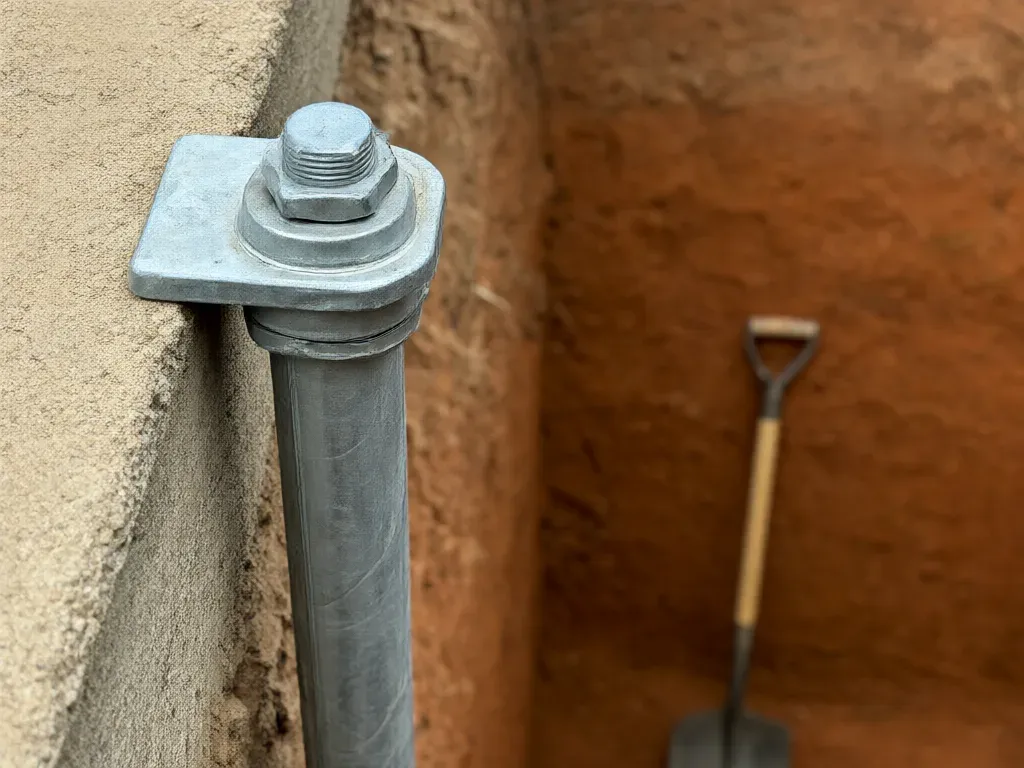
Foundation Piers in Frisco, TX
Frisco Superior Foundation Repair offers professional foundation pier installation in Frisco, TX, with 3,400+ foundations piered and repaired since 2006. We install pressed concrete pilings, drilled bell-bottom concrete piers, steel push piers and helical piers, plus new concrete piers and pads under pier and beam houses. Our most common pier, the pressed piling, usually reaches refusal between 12 and 22 feet down.
Every foundation pier we set follows an independent engineer's plan, sits on a precast cap or bracket with steel shims, and carries a lifetime warranty that transfers to the next owner for free. We own every rig we use, from the hydraulic rams to the truck-mounted auger, so the pier type is picked for your house, not for whatever equipment is free that week.
Get a FREE Estimate
Or call (469) 536-0217
Foundation Pier Types We Install
Each has a job it does best. Here are the specs and prices so you can compare bids line by line.
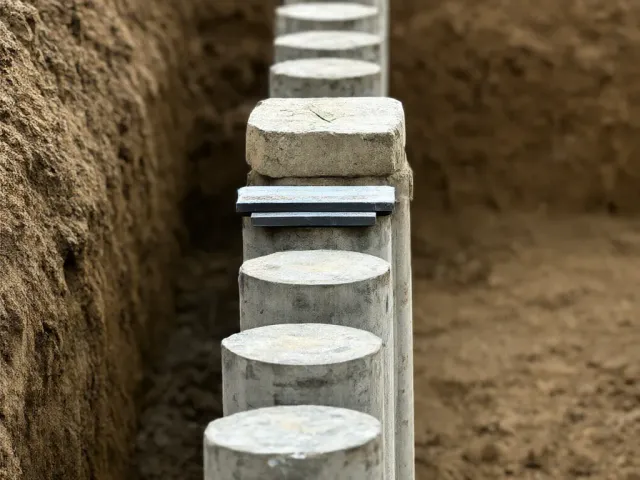
Pressed Concrete Pilings
Precast cylinders 6 inches across and 12 inches tall, stacked and pressed with a hydraulic ram until the weight of the house won't drive them further. Capped with a precast block and steel shims. They run $375 to $575 each outside, $750 to $1,100 inside, and they're right for most single-family slabs here.
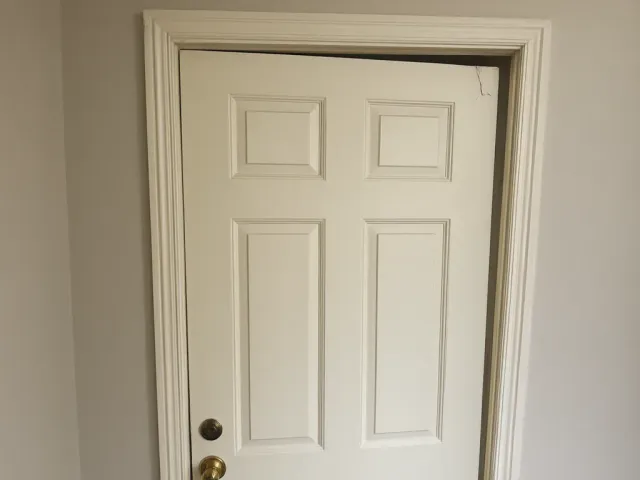
Drilled Bell-Bottom Concrete Piers
A 12-inch shaft augered 10 to 15 feet down, flared to a 24- to 30-inch bell, then filled with 3,000 PSI concrete around four lengths of half-inch rebar. They spread heavy loads like stone fronts and big fireplaces. Expect $950 to $1,450 each and a 7 to 10 day cure.
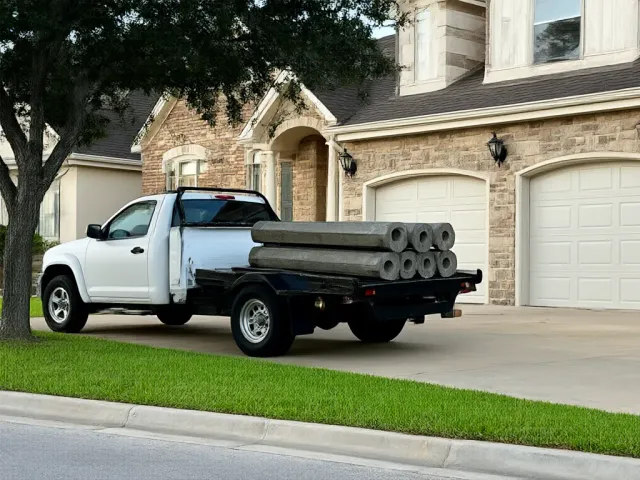
Steel Push Piers
Sections of 2 7/8-inch galvanized steel tube driven through a bracket on the beam, using the house as the reaction weight. We log the drive pressure on every pier, which gives the engineer a number for each one. They run $1,300 to $2,000 each.
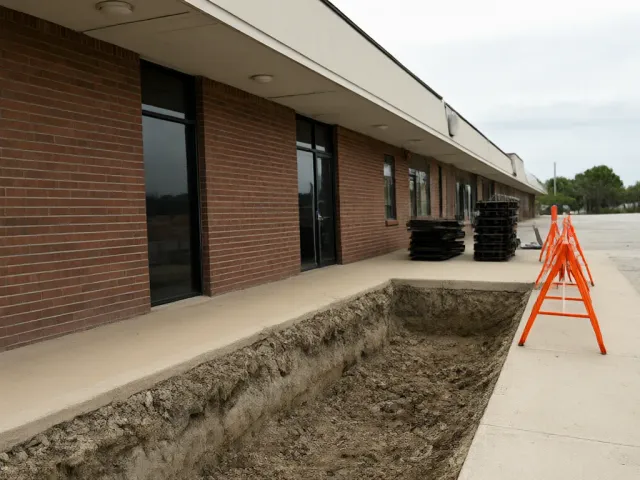
Helical Piers
A steel shaft with 8-, 10- or 12-inch helix plates screwed into the ground until the installed torque hits the engineer's target. They don't rely on the house weight, so they suit additions, patio covers, porches and lighter loads. They run $1,500 to $2,400 each.
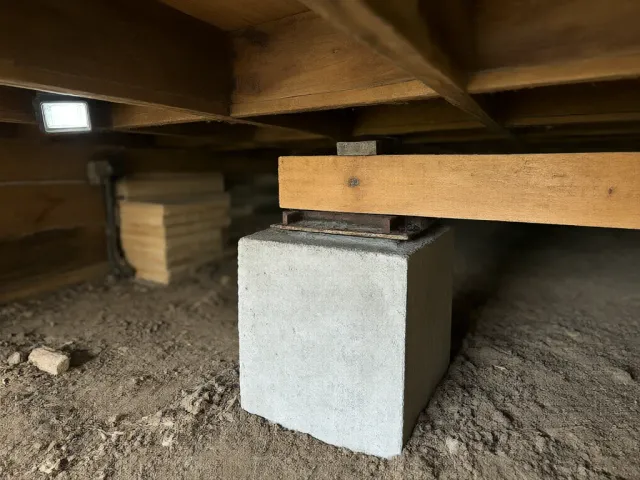
Concrete Piers and Pads for Pier and Beam
Under a crawl-space house, the pier is a new concrete pier on a footing pad under the girder, replacing cedar posts or block stacks. Steel shims go on top. They run $350 to $650 each.
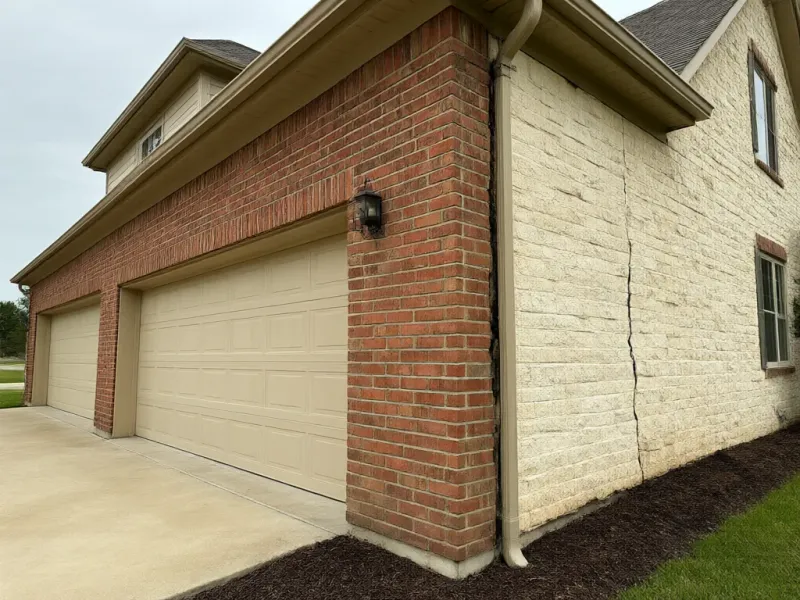
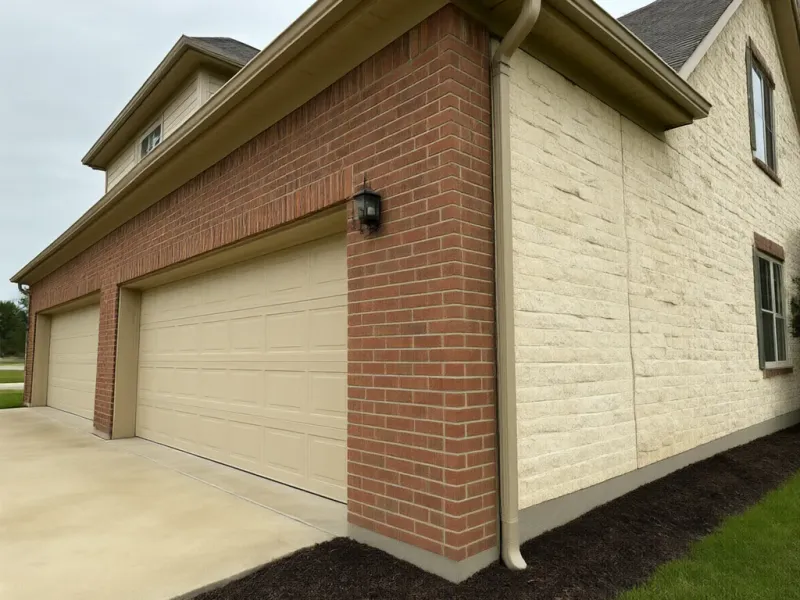
Before and After
How We Choose a Foundation Pier
The engineer makes the call, using our survey and a look at the house. Four things drive it: how much load sits on that stretch of beam, how much room we have to work, what the ground is like below the clay, and what you're spending. Most Frisco slabs end up on pressed pilings because they handle typical house loads well at the lowest cost per pier.
Load
A one-story brick ranch spreads its weight fairly evenly. A two-story with a stone front or a masonry fireplace puts a lot more on one section of beam. That's where the engineer may call for bell-bottoms or steel push piers under those walls, and pressed pilings elsewhere.
Access
Pressed pilings need a hole beside the beam and room to set the ram. Bell-bottoms need room for the auger. Where a pool deck, a driveway or a neighbor's fence leaves almost no space, steel push piers or helical piers go in through a smaller hole.
Ground and Depth
Pressed and push piers go until the ground stops them, so they find their own depth. Bell-bottoms go to a set depth below the seasonal moisture swing. Helical piers go until the torque says the soil can carry the load. Each approach answers the same question differently.
Foundation Pier Specs to Compare on Any Bid
When you're holding two bids, compare the pier type, the count and the spacing first. Pier spacing comes from the engineer and usually runs 6 to 8 feet apart along a grade beam. A bid with far fewer piers along the same wall is either reading a different survey or leaving gaps.
Then ask what goes on top. We cap every pressed piling with a precast block and steel shims. Wood shims and stacked brick save a few dollars and rot or crush later. Ask whether there's an independent engineer, a drain-line test before and after the lift, and a permit. Ours includes all three.
Last, ask about the warranty. Ours is lifetime on every pier we set, for the life of the structure, and it transfers to the next owner for free. Ask any other bidder what their transfer fee is, and whether the warranty covers re-adjusting a pier that settles.
Foundation Pier Myths We Hear
Deeper always means better. Not on its own. A pressed piling that reaches refusal at 12 feet is doing its job. Pushing a pier deeper for the sake of a number doesn't make it carry more if it's already stopped.
Steel is always better than concrete. Steel push piers give you a logged pressure on every pier and go in through a smaller hole, which is useful. For a typical one-story slab, a pressed concrete piling at a fraction of the price carries the load fine. We install both and use each where it fits.
Piers stop all movement. Piers hold the beam where it sits. They don't stop clay in the middle of the slab from swelling when a leak or a downspout floods it. That's why we test drains before and after, and why drainage is part of every inspection.
Foundation Pier Paperwork You Keep
After the lift you get the engineer's final letter, the city permit where the city requires one, a pier map showing every location and type, and the warranty in your name. Keep them together. When you sell, the buyer's inspector will ask, and the buyer calls us within 30 days of closing to put the warranty in their name.
Find Out Which Foundation Piers Your House Needs
Call (469) 536-0217 for a free survey within 48 hours. Your written estimate lists the pier type, count and price for each location.