
Concrete Leveling and Slab Jacking in Frisco, TX
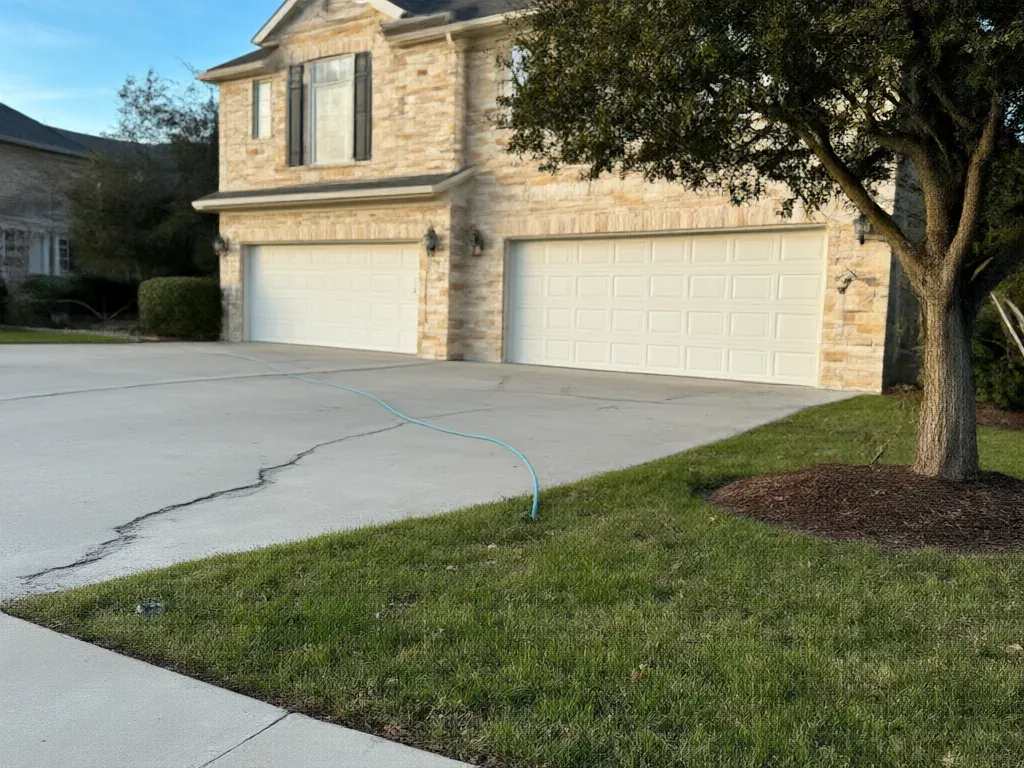
Frisco Superior Foundation Repair offers professional concrete leveling and slab jacking in Frisco, TX for sunken driveway panels, sidewalks, patios, pool decks and garage approaches. We lift flatwork with polyurethane foam injected through 5/8-inch holes or with traditional mudjacking through holes about 1 1/2 inches across. A typical one- or two-panel job comes in at $650 to $1,400.
Concrete leveling is for flatwork, not houses. A driveway panel that's dropped at the garage, a walk that trips people at the front porch, or a patio sloping back toward the slab can usually be lifted and sealed for a fraction of what tear-out and a new pour costs. We'll tell you when a panel is too broken to lift and needs replacing instead.
Get a FREE Estimate
Or call (469) 536-0217
Concrete Leveling Services
Same idea for every one: fill the void under the panel and lift it back into line. The method and the spot change.
Polyurethane Foam Concrete Leveling
We drill small holes, inject a two-part foam that expands under the panel and lifts it as it fills the void. It weighs a fraction of what mudjacking slurry does, so it doesn't add load to clay that's already moving. It runs $7 to $12 per square foot and carries a 5-year warranty.
Mudjacking
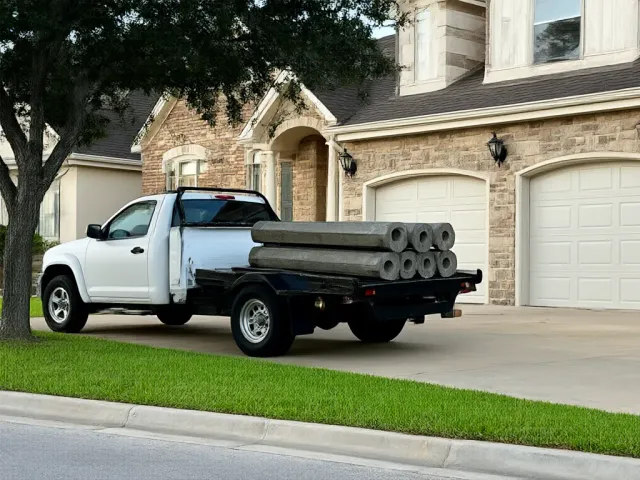
The traditional method: a cement and soil slurry pumped under the panel through larger holes until it floats back up. It costs less per square foot, $4 to $7, but it's heavier and the holes are bigger. It carries a 2-year warranty, and we recommend it mostly for large, simple slabs on a tight budget.
Driveway Leveling
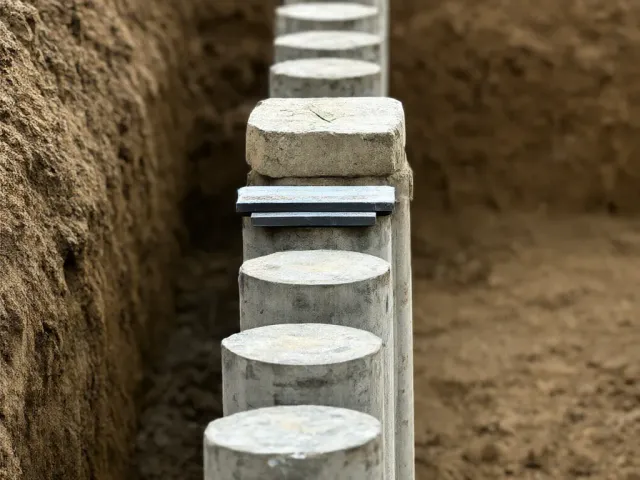
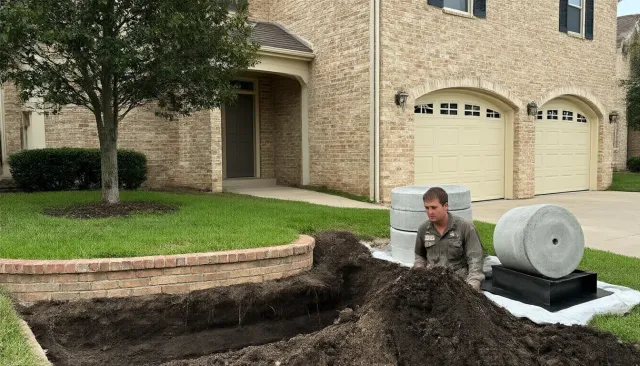
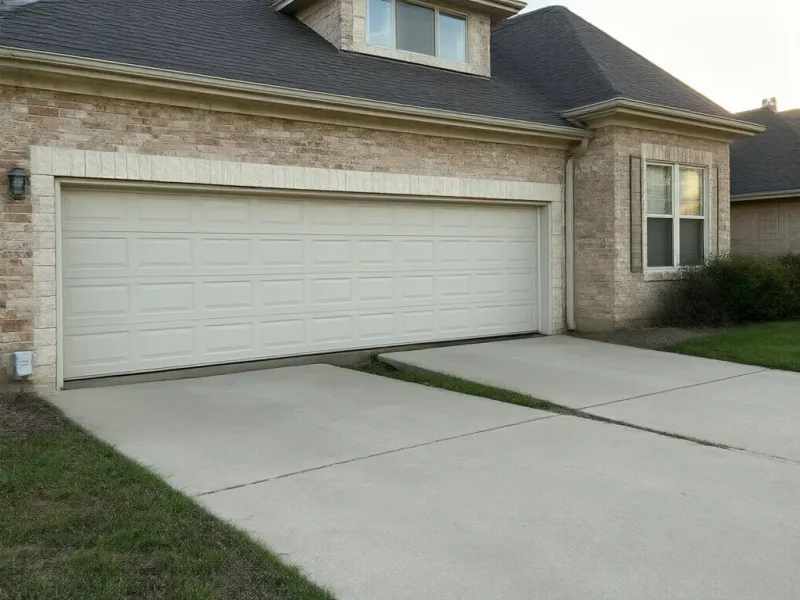
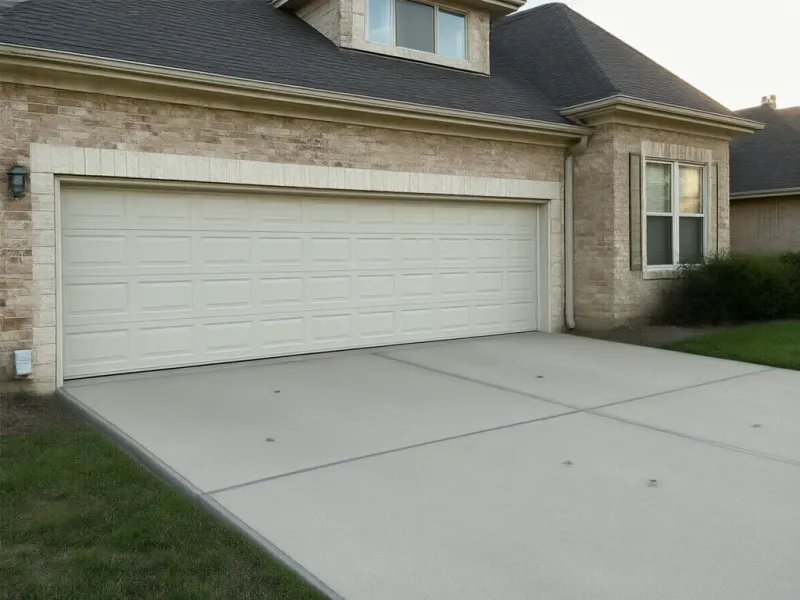
Driveway panels drop where the soil was disturbed for utilities or where a downspout soaks the edge. The panel at the garage door is the most common. Lifting it back stops water running toward the garage and fixes the bump you feel every time you pull in.
Sidewalk and Front Walk Leveling
A walk panel that's dropped or tipped creates a lip people trip on. We lift it flush with the next panel and grind any small remaining edge. It's usually a single-panel job in the $650 to $1,400 range.
Patio and Pool Deck Leveling
Patios that slope back toward the house send rain straight at the slab. Pool decks drop where backfill around the pool shell settles. We lift both with foam, which is light enough to use near a pool shell, and seal the joints afterward.
Before and After
Mudjacking vs Polyurethane Foam
Both work. They work differently, and the right one depends on the slab. Mudjacking pumps a heavy slurry under the panel. It's been around for decades and it's cheaper per square foot. The holes are about 1 1/2 inches across, and the slurry adds a lot of weight to the soil under the panel.
Polyurethane foam goes in through 5/8-inch holes and expands to fill the void. It weighs a fraction of what slurry does and it doesn't wash out, so it holds up better on clay. It costs more per square foot, $7 to $12 against $4 to $7 for mudjacking, and it carries a longer warranty: 5 years against 2.
On most residential driveways and walks we recommend foam. The holes are smaller, the patch disappears better and you can use it the same day. Mudjacking still makes sense on large, simple slabs where budget matters more than appearance.
How a Foam Lift Goes
We drill a few 5/8-inch holes in the low panel, inject the foam in short shots and watch a string line or a level as the panel comes up. When it's back in line with its neighbors, we stop, clean the holes and patch them. Most driveway and walk jobs are done in a morning.
The foam expands into voids we can't see, so we go slowly near the house and near expansion joints. Pushing too fast can lift a neighboring panel or crack a thin one. A slow lift is the difference between a panel that sits flush and one that rocks.
Why We Don't Slab Jack a House Foundation
Some companies will pump slurry or foam under a house slab and call it foundation repair. We won't. It fills voids, and it can lift the floor for a season, but it doesn't reach below the clay that's moving. When the clay shrinks again in August, the slab drops with it.
On a post-tension slab, drilling dozens of injection holes is also a risk to the cables if nobody scans first. And adding weight under a slab that's already settling doesn't help. House foundations get piers. Flatwork gets leveling.
When Concrete Should Be Replaced Instead
A panel that's cracked into several pieces, crumbling at the surface or broken by a tree root usually won't lift cleanly. The pieces move independently and the cracks open wider. That panel needs tearing out and repouring, and we'll tell you so rather than sell you a lift.
Roots are the other limit. If a root is what pushed a walk up, lifting the low side doesn't fix anything. The root has to be cut or the walk rerouted. We'll point that out on the visit.
Garage floors are a judgment call. On most houses the garage floor is part of the house slab, so a dropped garage floor is a foundation question first. We'll survey it with the manometer and tell you if it's a separate flatwork pour we can foam-lift, or part of the slab that needs piers along the garage beam instead.
Sealing Joints After a Lift
Water getting into open joints and under the panels is what washed out the soil in the first place. After every lift we seal the joints between panels and along the house with flexible sealant, and we fill the injection holes with color-matched patch.
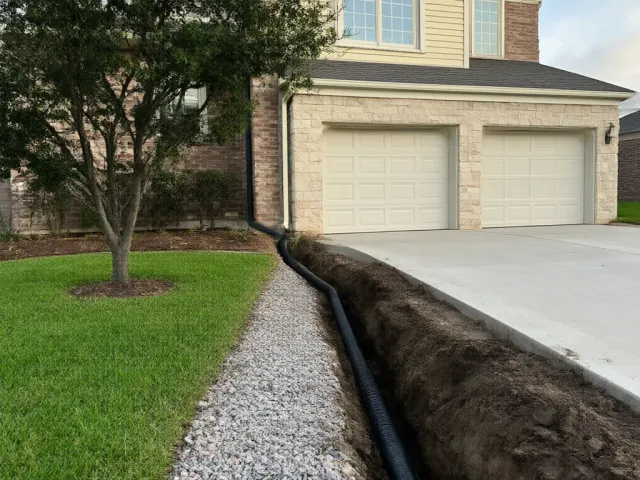
We'll also look at where the water is coming from. A downspout dumping on the driveway or a sprinkler soaking the edge of a walk will undermine it again. Those fixes are often cheap, and they protect the lift.
Get a Price on Concrete Leveling
Call (469) 536-0217. We'll look at the panels, tell you whether foam, mudjacking or replacement makes sense, and write the price the same day.