
Frisco Superior Foundation Repair | Slab Repair, Pier & Beam Repair, House Leveling & Drainage for Homes and Businesses
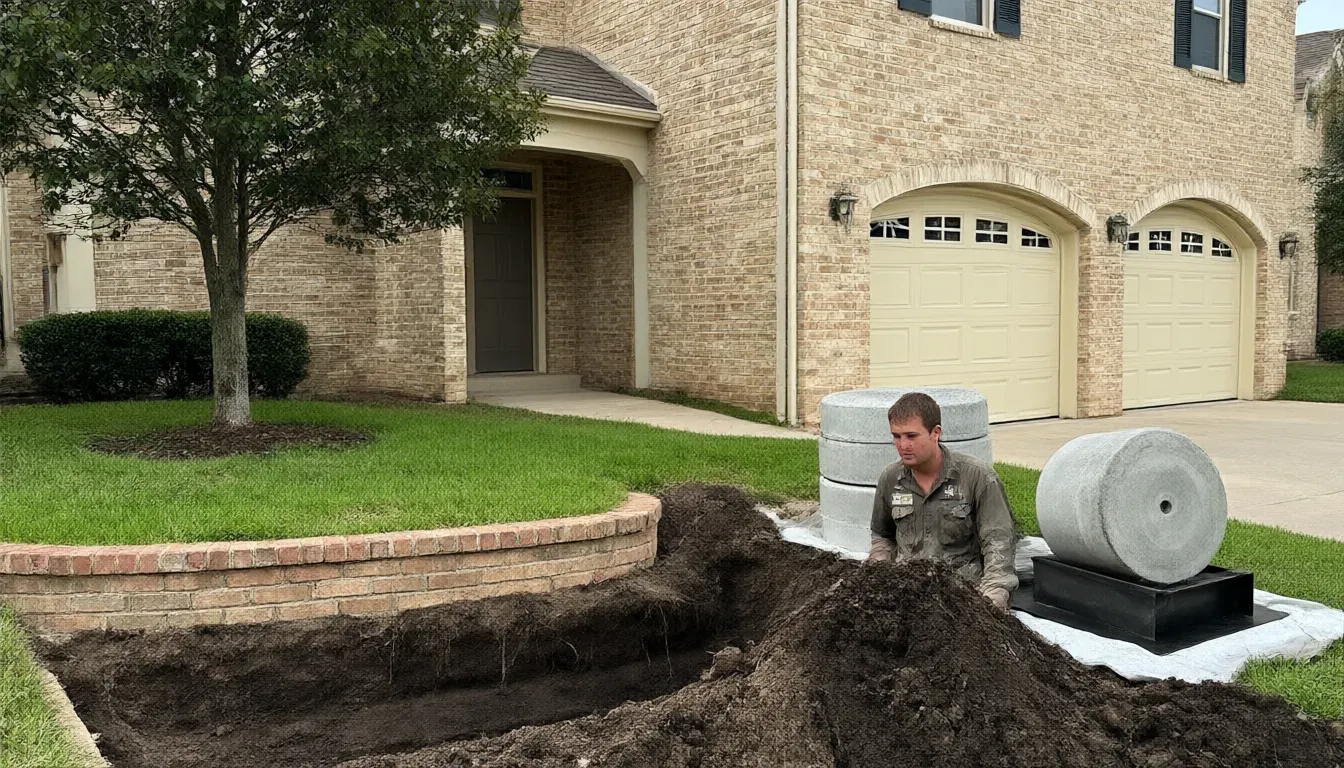
Frisco Superior Foundation Repair has done foundation repair in Frisco, TX since 2006, with 3,400+ foundations repaired on expansive Blackland Prairie clay. We handle slab foundation repair, pier and beam repair, house leveling, foundation crack repair, drainage, concrete leveling and crawl space work, using pressed concrete pilings, drilled bell-bottom piers, steel push piers and helical piers. Every pressed piling is a stack of 6 by 12-inch concrete cylinders driven to refusal, usually 12 to 22 feet down. On post-tension slabs we scan for the cables with ground-penetrating radar before we cut a thing.
A lot of our work is on foundations somebody already fixed: re-shimming old piers, checking a previous company's repair before you buy, or lifting the one corner that moved again. Texas doesn't issue a state foundation contractor licence, so here's what you get instead: the city permit wherever one is required, an independent licensed engineer's letter before and after, and general liability insurance plus workers' comp on every crew. Owner Dale Whitfield still does the inspections, and every pier we set carries a lifetime warranty that transfers to the next owner for free.
Get a FREE Estimate
Or call (469) 536-0217
Why Choose Frisco Superior Foundation Repair?
20 Years in Frisco, Fully Insured With Workers' Comp
Since 2006, with general liability and workers' comp on every employee, which Texas doesn't require.
No Commissioned Salesmen, No Padded Pier Counts
The owner or our other inspector writes every estimate, and nobody here earns more for adding piers.
Engineer Letters and Both Plumbing Tests Included
Independent PE evaluation, final letter and before-and-after drain tests come with every pier job.
Inspection Within 48 Hours, Most Jobs Done in 1 to 3 Days
Most pier jobs start within 2 weeks of signing, and urgent ones start within 5 business days.
Pilings Pressed to Refusal, Not to a Fixed Depth
Each 6 by 12-inch cylinder goes down until the house won't push it further, usually 12 to 22 feet.
Foundation Repair Services for Frisco Homes
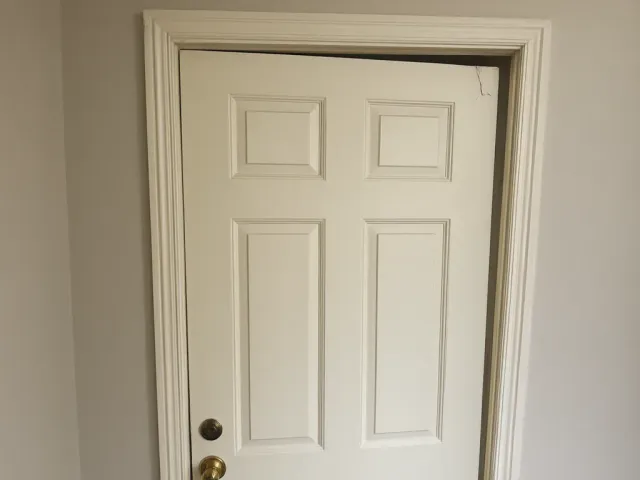
Most calls start with a sticking door or a crack in the brick. Here's what that call can turn into, and what each piece of work costs.
Slab Foundation Repair
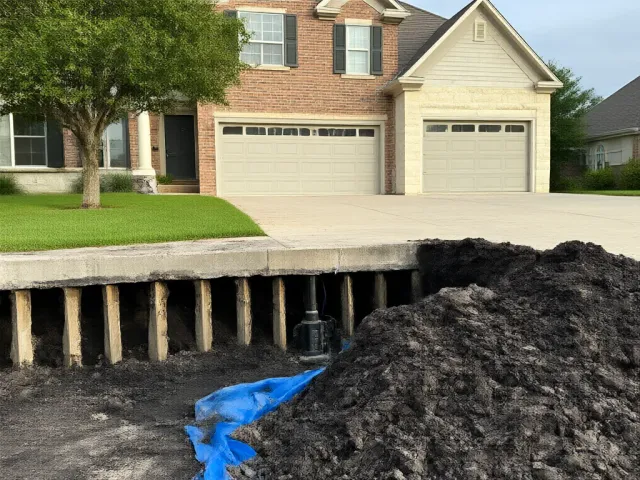
Most Frisco houses are slab-on-grade, and a lot of them are post-tension slabs. We lift the dropped side on exterior pilings, add interior piers through a tunnel where the survey calls for them, and test the drain lines before and after. A typical repair with 8 to 14 exterior pilings runs $3,800 to $9,500.
Pier and Beam Foundation Repair
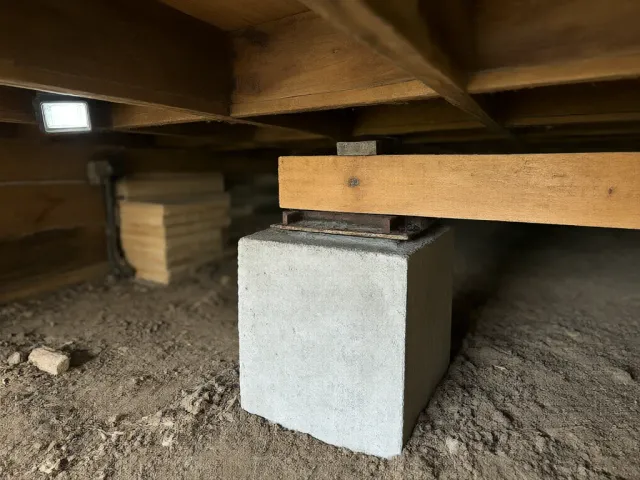
Crawl-space houses get new concrete piers and pads under the girders, steel shims instead of wood, and new sill or joist sections where rot has set in. A whole-house re-shim runs $650 to $1,800, and new piers include one free re-shim visit within 24 months.
Foundation Inspection
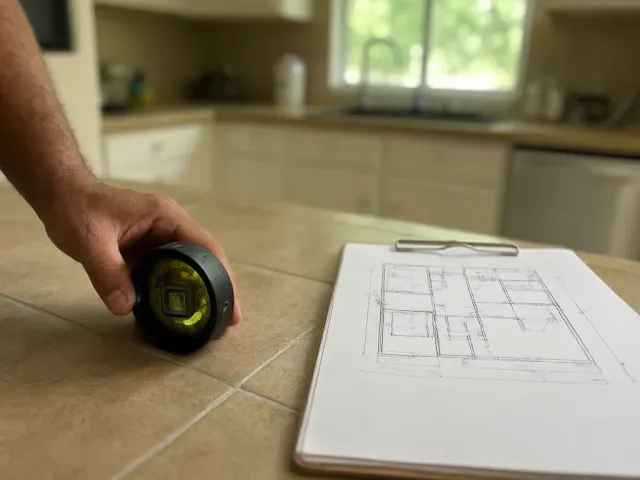
Our inspection is free and takes 60 to 90 minutes. We shoot 40 to 70 elevation readings with a digital manometer, check doors, brick, drainage and trees, and write the estimate the same day. Buying a house? You get a written report within 24 hours of the visit.
House Leveling
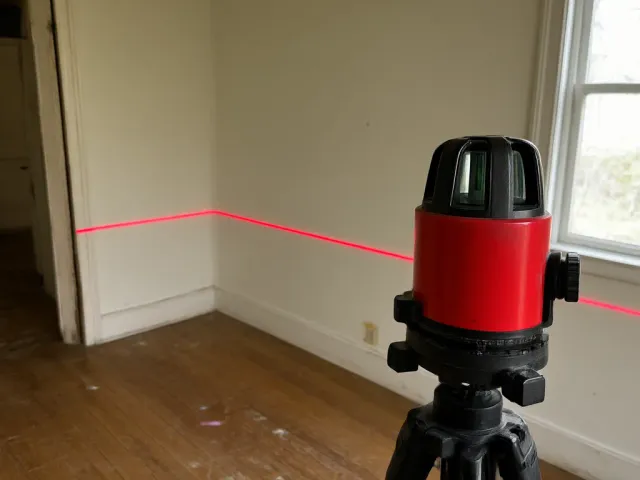
When floors slope and doors bind across the whole house, we level it as one job instead of chasing corners. Whole-house slab leveling on 20 to 32 pilings runs $8,500 to $19,500, with interior piers only where the survey shows they're needed.
Concrete Piering With Pressed Pilings
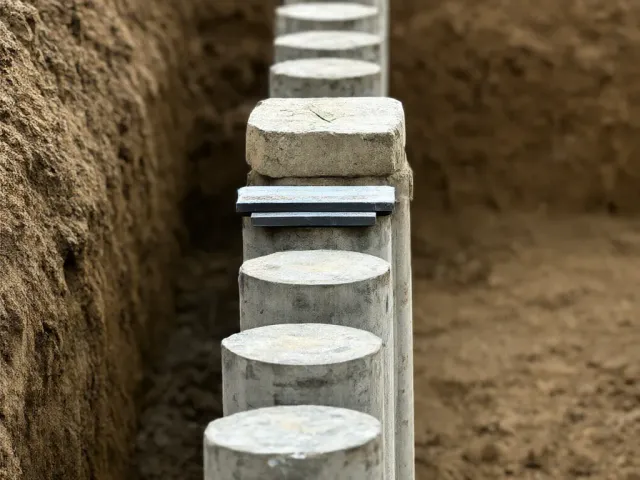
Pressed concrete pilings are our most common repair. Each one is a stack of 6 by 12-inch precast cylinders pressed with a hydraulic ram to refusal, then capped with a precast block and steel shims. Exterior pilings run $375 to $575 each.
Drilled Bell-Bottom Piers
Heavy two-story walls and stone fronts can call for a drilled bell-bottom pier: a 12-inch shaft, a 24- to 30-inch bell, 10 to 15 feet deep with four lengths of half-inch rebar. They run $950 to $1,450 per pier and cure 7 to 10 days before we lift.
Steel Push Piers and Helical Piers
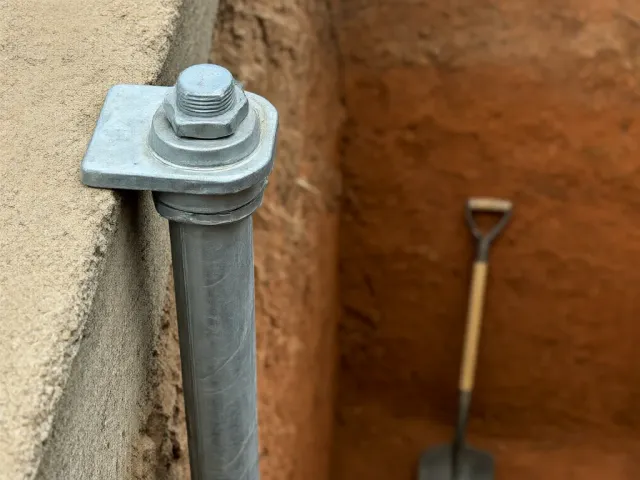
Steel push piers are 2 7/8-inch galvanized tube driven against the weight of the house, with drive pressure logged on every pier. Helical piers screw in to a target torque and suit additions, patio covers and tight access. Expect $1,300 to $2,000 per push pier and $1,500 to $2,400 per helical.
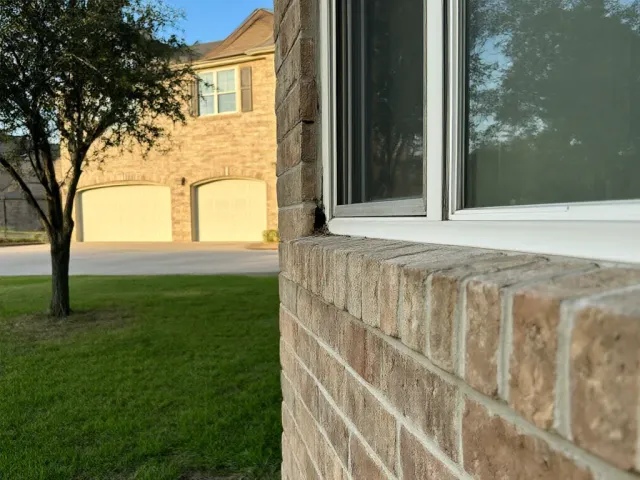
Foundation Crack Repair
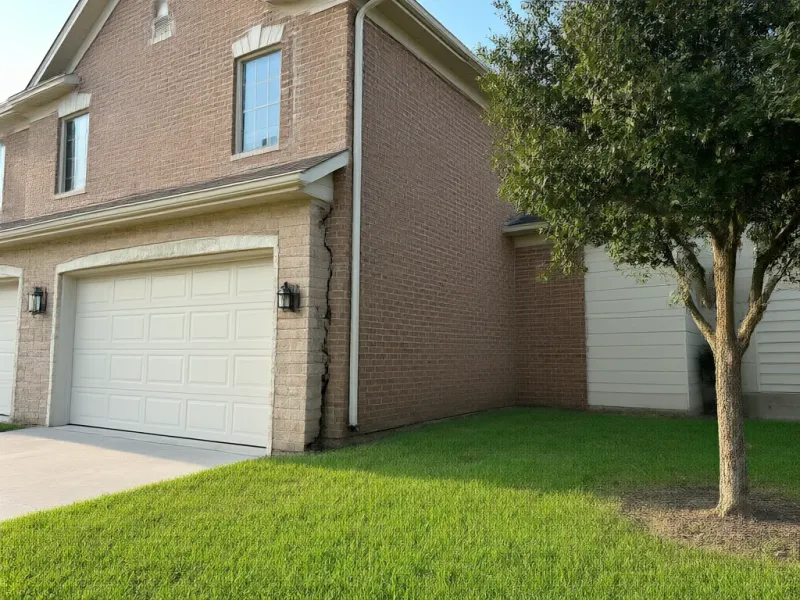
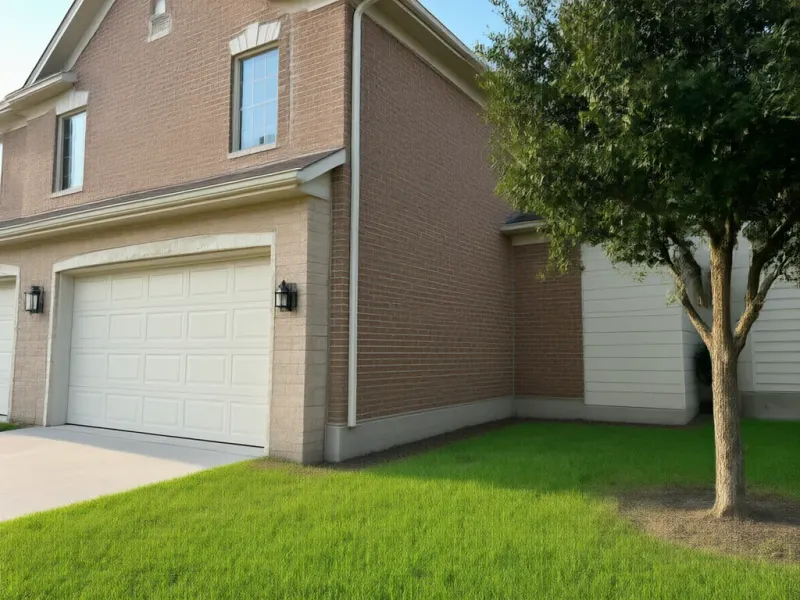
A crack wider than 1/8 inch, or one with one side higher than the other, gets measured and logged on the survey. We inject slab edge and grade beam cracks with epoxy or polyurethane for $450 to $950 per crack, and repoint brick with matched mortar instead of caulk.
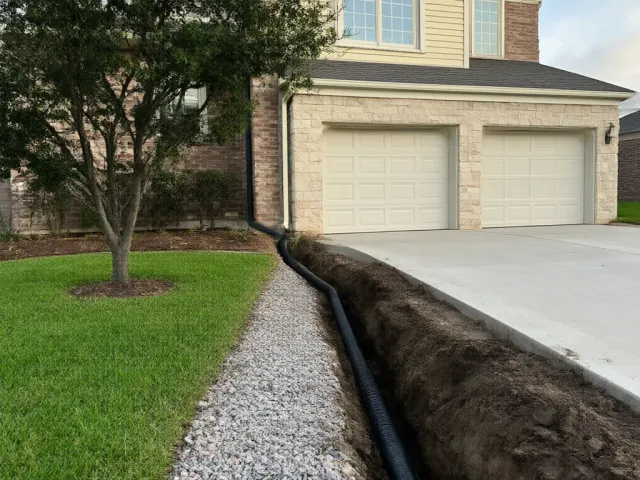
Foundation Drainage and French Drains
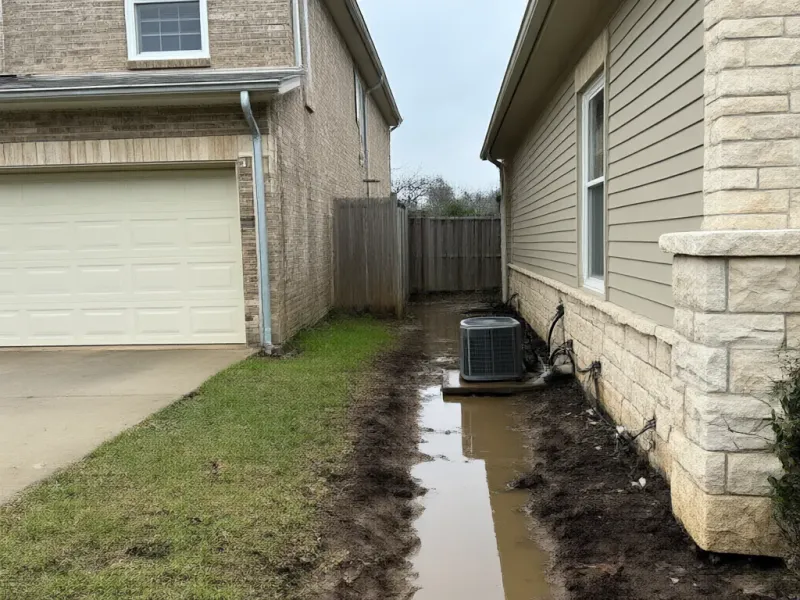
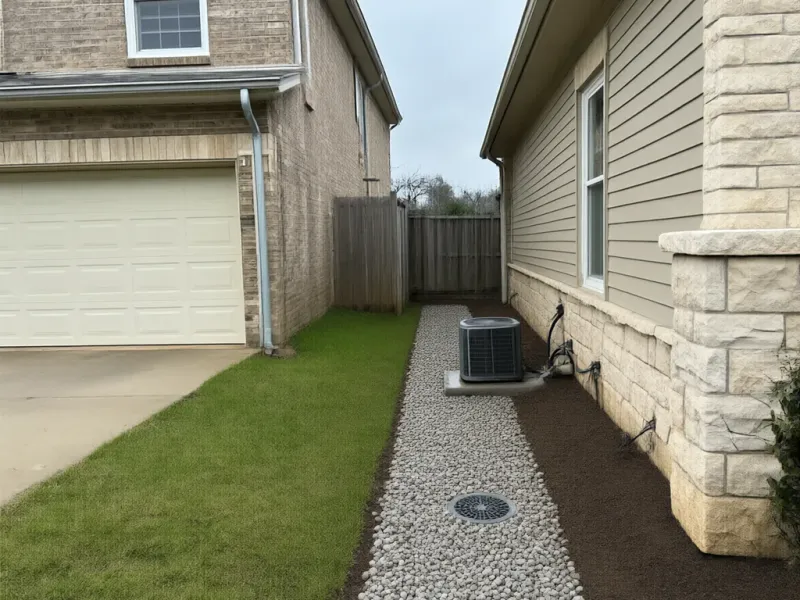
Water sitting against a slab on clay moves it. We regrade for 6 inches of fall in the first 10 feet, bury downspout lines for $22 to $40 per linear foot, and dig French drains with washed gravel and perforated pipe for $38 to $65 per linear foot.
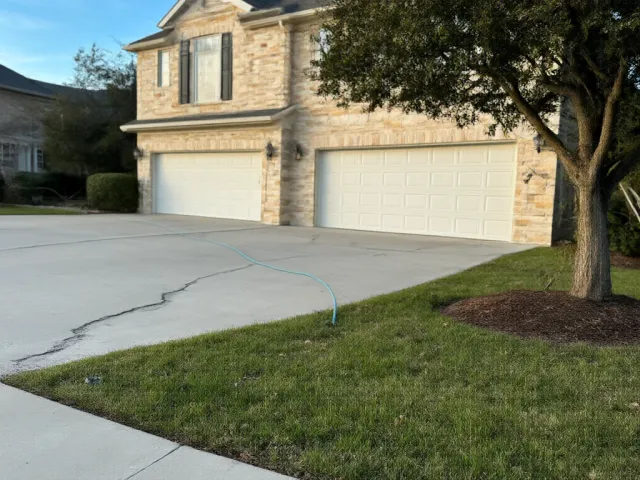
Concrete Leveling and Mudjacking
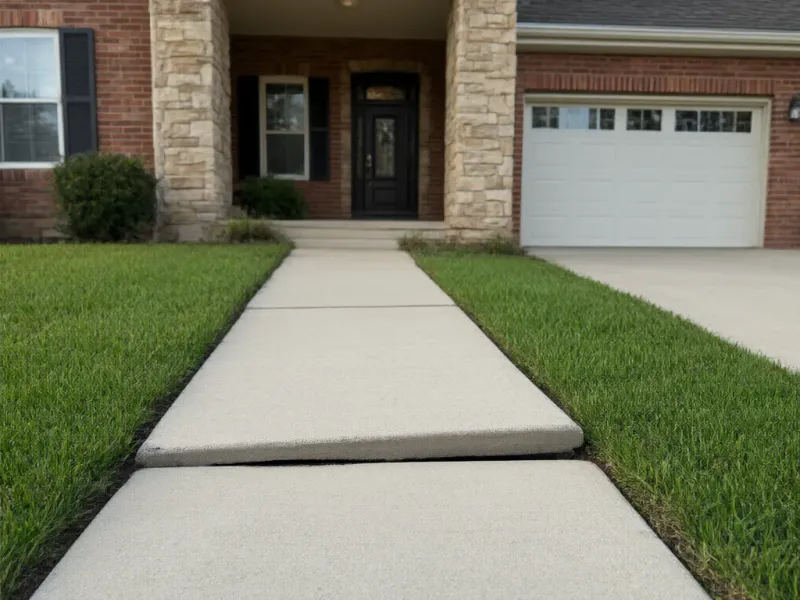
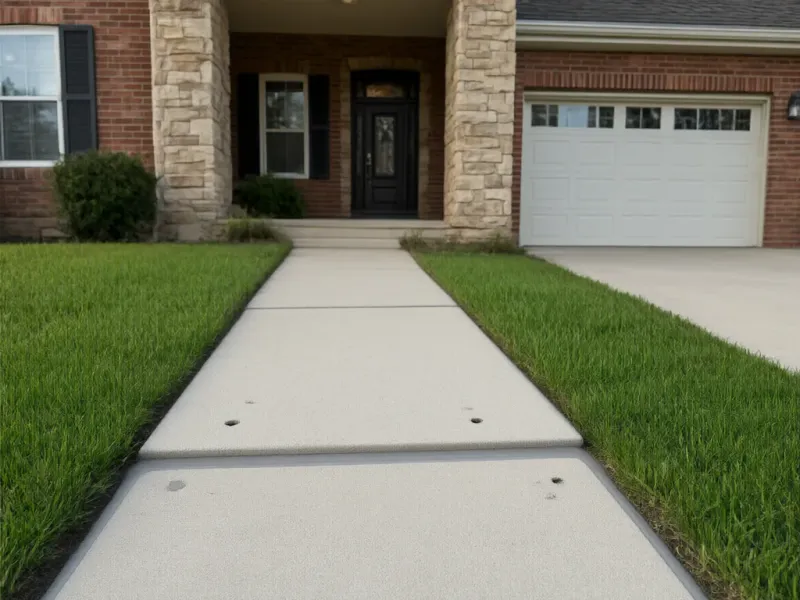
Sunken driveway panels, walks and patio slabs come back up with mudjacking or polyurethane foam pumped through 5/8-inch holes. Most single-panel and two-panel lifts run $650 to $1,400. We don't use either one under a house slab.
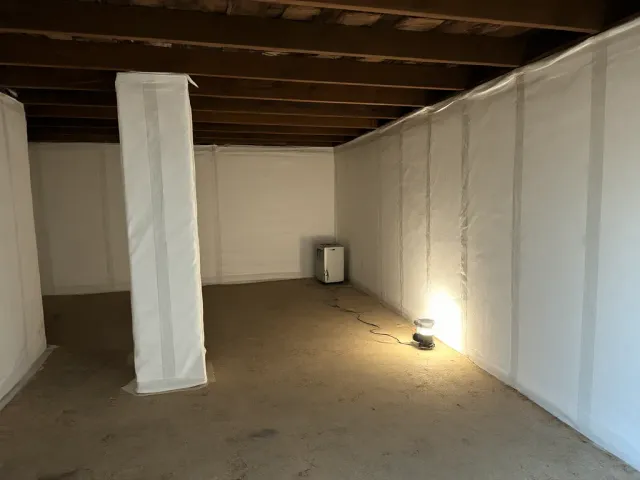
Crawl Space Repair and Encapsulation
Damp crawl spaces rot sills and rust shims. We seal them with a 12-mil reinforced liner, taped seams and a dehumidifier that holds the space under 60 percent humidity. A typical 1,200 to 2,000 square foot crawl space runs $5,500 to $12,500.
Before and After
Commercial Foundation Repair Contractors for Property Owners
Same clay, bigger buildings, and tenants who still need to get in the door. Every commercial job runs off an engineer's plan and a city permit.
Apartments, Townhomes and HOAs
Garden-style apartments, duplexes, fourplexes, townhome rows and condo buildings. We survey each building for $275, credited against repair work on it, and phase the piers so residents keep their parking and their weekdays.
Retail Strip Centers and Restaurants
Storefront slabs crack at the entry and pull away from the sidewalk. We work early mornings and after close, keep the accessible route open, and pier to the engineer's plan with steel push piers or drilled piers where the loads are heavy.
Offices and Medical Buildings
Single-story offices and clinics with tile floors and partition walls show movement fast. We coordinate with the owner's engineer, log every pier, and hand over a final letter for the building file.
Churches and Schools
Long spans, fellowship halls and wings built in phases. An addition on a different foundation than the original building often separates at the joint, and helical or drilled piers tie it back in.
Warehouses and Light Industrial
Slab-on-grade warehouses and flex space take forklift and dock traffic. We level floor panels with foam, pier perimeter beams where they've dropped, and schedule around shipping hours.
Specialty Foundation Services
Root Barrier Installation
Big shade trees pull water out of clay faster than you can put it back, and the corner nearest the tree drops. A root barrier cut 36 to 48 inches deep between the tree and the slab runs $35 to $60 per linear foot and doesn't kill the tree.
Foundation Watering Systems
A drip line 12 to 18 inches out from the slab, on a timer, keeps the clay from shrinking away from the beam in August. We install them for $1,200 to $2,800 per house, and sometimes that's the whole fix.
Real Estate Foundation Inspections
Texas buyers work inside a short option period, so we survey the same week and send a written report within 24 hours of the visit. If the house has an old repair, we check the piers against the paperwork and the warranty.
Post-Tension Tendon End Repair
On a post-tension slab the cable anchors sit in grouted pockets along the slab edge. When that patch falls out, the anchor rusts. We clean, coat and re-grout exposed tendon ends before a rusty anchor becomes a cable problem.
Second Opinions and Re-Shimming Old Repairs
Piers set by another company years ago can settle or lose shims. We survey them, re-shim with steel where the piers are sound, and tell you plainly if the old company's warranty should be used first.
Why We're a Better Foundation Repair Contractor for Frisco Clay
Anybody with a truck can press a piling. The difference shows up years later, when the house sells and the buyer's inspector pulls out a manometer. Here's how we run a job, what we put in the ground, and the failure modes we plan around on Frisco houses.
None of it is secret. We'd rather you understand the work than take our word for it, so this is the long version.
How a Foundation Repair Job Runs With Us
Free Inspection and Elevation Survey
Dale or our other inspector spends 60 to 90 minutes on site, takes 40 to 70 manometer readings and maps the high and low spots before anyone talks about piers.
Written Estimate the Same Day
You get a price before we leave or by email that evening, with the pier count, the pier type and everything that's included in writing.
Engineer, Permit and Pre-Lift Drain Test
An independent PE writes the pier plan in 3 to 5 business days, we pull the city permit, and we static-test the drain lines before anything gets lifted.
Piers, Lift and Steel Shims
Crews dig, press or drill, then lift the house in stages while we watch the manometer and the cracks. Most slab jobs take 1 to 3 days on site.
Post-Lift Test, Final Letter and Warranty
We test the drains again, backfill and clean up. You get the engineer's final letter and a lifetime pier warranty that transfers for free.
Blackland Prairie Clay and Why Frisco Slabs Move
Frisco is built on high-plasticity expansive clay, the dark Houston Black type that runs through the Blackland Prairie. It swells when it's wet and shrinks and cracks when it dries. A slab sitting on top rides that cycle every year.
Most of what we see is shrink settlement on the dry side of the house in July, August and September. The rest is heave: a wet spring after a dry year, or a leak, pushing part of the slab up. They look alike from inside the house and need different fixes, which is why the survey comes before any talk of piers.
Post-Tension Slabs and the GPR Scan
A large share of Frisco houses sit on post-tension slabs. Steel tendons, half-inch strand in a plastic sheath, run through the concrete under heavy tension. Some garages have a stamp telling you not to cut. No stamp doesn't mean no cables.
We scan with ground-penetrating radar before any core, cut or interior breakout. Where an interior pier sits under a PT slab, we often tunnel to it instead, at $160 to $240 per linear foot. Cut a tendon and a foundation repair becomes a structural one, with a real hazard to whoever's on the saw.
Pressed Concrete Pilings, Pressed to Refusal
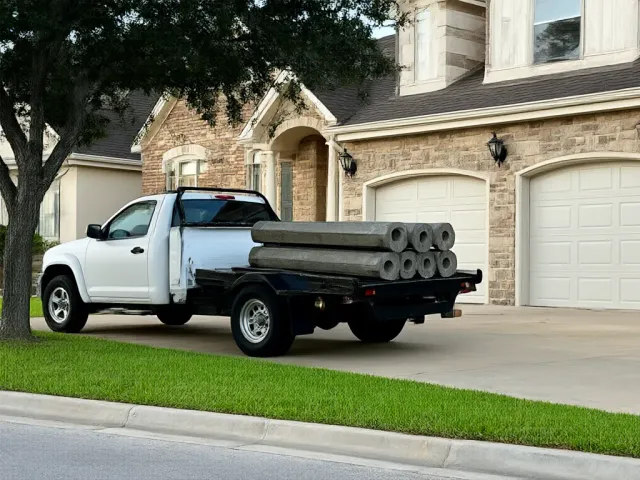
Our default pier is the pressed concrete piling. We dig beside the grade beam, set a 6 by 12-inch precast cylinder and press it down with a hydraulic ram, using the house as the reaction weight. Then the next cylinder, and the next, until the house won't push them any further.
In Frisco clay that refusal point usually lands between 12 and 22 feet. We cap the column with a precast block and steel shims, never wood or stacked brick. Pier spacing comes from the engineer, usually 6 to 8 feet apart along the beam.
Bell-Bottom, Steel and Helical Piers for Heavier Loads
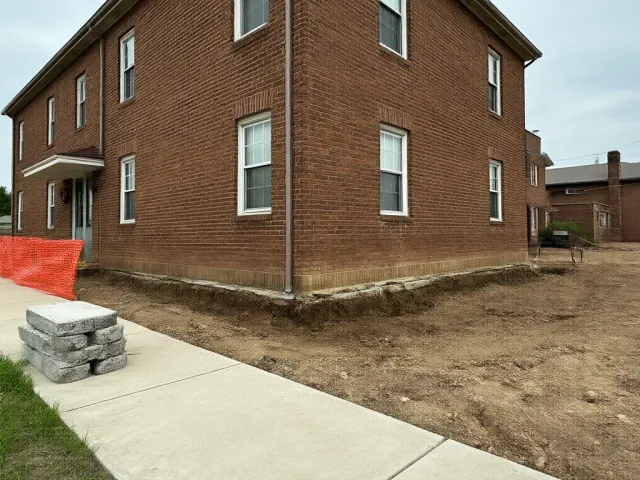
Some loads need more than a piling. A two-story stone front, a big masonry fireplace or a long point load can get a drilled bell-bottom pier: a 12-inch shaft flaring to a 24- to 30-inch bell, 10 to 15 feet down, with 3,000 PSI concrete and four lengths of half-inch rebar.
Steel push piers go in where the engineer wants a logged drive pressure on every pier. Helical piers suit additions, patio covers and lighter loads, torqued to the engineer's target. We own the rams, the auger and the torque gear, so the engineer's choice isn't limited by what we could rent that week.
Plumbing Tests Before and After the Lift
A leaking drain line under a slab soaks the clay and pushes the slab up. Pier that house and you've locked the problem in. So we plug the main cleanout, fill the drain lines with water and watch the level for 30 minutes before we lift anything.
Then we test again after the lift, because raising a slab can stress an old joint. Both tests are in the price on every slab pier job. Bought on its own, a static drain test runs $275 to $450.
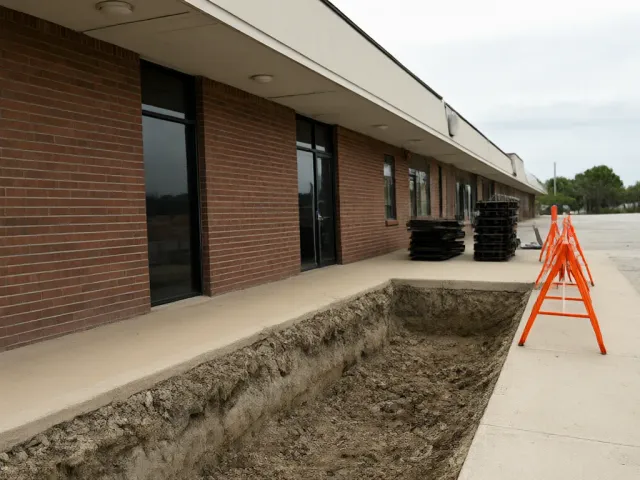
Independent Engineers and City Permits
Texas doesn't license foundation contractors, so the protection you get is the paperwork. Every pier job we do has an independent Texas-licensed professional engineer who isn't on our payroll. They evaluate the house, write the pier plan and sign a final letter after the lift.
We pull the permit wherever the city requires one, and Frisco treats foundation repair as a permitted alteration. Frisco also asks contractors to register with its Building Inspections Division and file proof of insurance. Keep those papers, because a buyer's inspector or lender will ask for them.
Trees, Watering and the August Gap
Roots rarely lift a slab. They dry the clay under it, and the corner nearest the tree drops. A live oak planted close to the house looks great for its first few years, then starts pulling water from under the beam.
We won't sell you piers for mild movement without asking about your watering habits first. Running a soaker hose 12 to 18 inches out from the slab on dry weeks keeps the clay from shrinking. If a tree is too close, a root barrier 36 to 48 inches deep can cut off those thirsty roots.
Grading and Downspouts Around the Slab
Residential code requires at least 6 inches of fall in the first 10 feet from the house. Many yards lose this slope after adding new mulch or flower beds. Always keep at least 4 inches of slab showing below the brick to prevent water from sitting against the beam.
If a downspout dumps water at a corner, that corner will move every spring. We solve this by burying downspout lines to a curb or a pop-up emitter. We also dig French drains where water pools in a side yard. All drainage work includes a 5-year workmanship warranty.
The Lifetime Pier Warranty, in Plain Terms
Every pier we set comes with a lifetime warranty for the life of the structure. If a warrantied pier settles, we'll re-adjust it at no charge. The warranty transfers to the next owner for free. The new buyer just needs to call us within 30 days of closing.
The warranty doesn't cover new movement in areas we didn't pier or heave caused by a plumbing leak. We tell you this now to avoid arguments later. It's also why we test your drains twice.
Foundation Repair Cost in Frisco, TX
These are our 2026 price ranges for Collin and Denton County. We write your specific number at the inspection before any work begins. That price stays firm unless the scope of the job changes.
Watch what a cheap bid leaves out. No engineer, no drain test, wood shims or a pier count picked to hit a price will all make a number look better on paper.
| Job | Typical range | What drives the price |
|---|---|---|
| Foundation inspection and elevation survey | Free | Written estimate the same day |
| Pressed concrete piling, exterior | $375 to $575 per piling | Our most common repair |
| Pressed concrete piling, interior | $750 to $1,100 per piling | Includes breakout and patch, or tunnel access |
| Drilled bell-bottom pier | $950 to $1,450 per pier | Plus a 7 to 10 day cure |
| Steel push pier | $1,300 to $2,000 per pier | Drive pressure logged on every pier |
| Typical slab repair, 8 to 14 exterior pilings | $3,800 to $9,500 | Engineer letters and both drain tests included |
| Pier and beam re-shim, whole house | $650 to $1,800 | Steel shims only |
| French drain | $38 to $65 per linear foot | Washed gravel, perforated pipe, filter fabric |
| Driveway, walk or patio leveling | $650 to $1,400 per job | Most single-panel and two-panel lifts |
Want an independent engineer's report without a repair bid? That's $450 to $650, paid straight to the engineer. On every pier job we do, it's included.
Our Service Areas Around Frisco
Frisco Superior Foundation Repair serves surrounding areas to Frisco, TX, including McKinney, Prosper, Little Elm, The Colony, Celina and Allen.
Inside Frisco we work everywhere from the renovated bungalows of the Rail District, where some houses still sit on pier and beam, to the master-planned streets of Phillips Creek Ranch, Richwoods, Starwood, Newman Village, Frisco Lakes and Hollyhock. The city straddles Collin and Denton County, and the clay doesn't stop at the county line.
Frisco was the fastest-growing city in the country from 2000 to 2009, so most of what we pier is a slab poured from the late 1990s on, many of them post-tension. It's also been a Tree City USA since 2003, which means more shade trees growing toward more slabs every year. The older houses near the original downtown are a different job entirely: crawl spaces, cedar posts and steel shims.
- Frisco, TX
- McKinney, TX
- Prosper, TX
- Little Elm, TX
- The Colony, TX
- Celina, TX
- Allen, TX
Foundation Repair Questions We Get in Frisco
Are you searching for 'foundation repair near me'?
If you've been searching for foundation repair near me in Frisco, TX, you've found the right team. Frisco Superior Foundation Repair is a locally based foundation repair contractor serving Frisco and the surrounding area. Call us at (469) 536-0217 or request a free quote. We respond fast, with an inspector at your house within 48 hours.
How do I know if I need piers or just a watering plan?
The elevation survey gives us the answer. If the manometer shows mild seasonal movement and your doors still latch, we'll suggest a watering plan and tell you to check back in the spring. If a specific area is dropping or cracks are offset, you'll likely need piers.
Do you need a permit for foundation repair in Frisco?
Yes. Frisco lists foundation repair as a permitted residential alteration, and we pull the permit as part of the job. Texas has no state foundation contractor licence, so the permit, the independent engineer's letters and our insurance are what protect you.
Is it safe to put piers under a post-tension slab?
Yes, as long as nobody cuts a cable. Exterior pilings go beside the grade beam and don't touch the tendons. For interior piers we scan with ground-penetrating radar first, and we often tunnel under the slab instead of breaking out the floor.
How long does foundation repair take?
Most slab pier jobs take 1 to 3 days on site. Add 3 to 5 business days up front for the engineer's pier plan, and a 7 to 10 day cure if the engineer calls for bell-bottom piers.
Does your warranty transfer when I sell the house?
It transfers at no cost. The new owner just calls us within 30 days of closing to move the lifetime pier warranty into their name. Give them the permit and the engineer's final letter too. Their inspector will want to see them.
Will the cracks close up after you lift the house?
Some will. Brick stair-step cracks often narrow a lot as the wall comes back up. Drywall and tile cracks usually need patching afterward. We lift in stages and watch the cracks as we go, so we don't open new ones chasing a perfect reading.
Will you work on a house another company already repaired?
Frequently. We inspect the old piers, re-shim with steel where they are still solid, and install new piers where movement continues. If you still have an active warranty from the previous company, we'll tell you to use it first.
Book a Free Foundation Inspection in Frisco
Call (469) 536-0217, Mon-Fri 7am-6pm, or fill out the form. We'll arrive at your house within 48 hours with a manometer. You'll get a written estimate the same day.