
Foundation Drainage and Water Management in Frisco, TX
Frisco Superior Foundation Repair offers professional foundation drainage and water management in Frisco, TX, backed by 20 years of fixing what water does to slabs on clay. We install French drains, buried downspout lines, surface drains with catch basins, root barriers and foundation watering systems, and we regrade beds that slope toward the house. French drains run $38 to $65 per linear foot.
On expansive clay, water is most of the story. Too much at one corner and the slab heaves, too little in August and it settles. Good drainage keeps the moisture under the slab steady all year, and it's often cheaper than a single pier. Every drainage job carries a 5-year workmanship warranty.
Get a FREE Estimate
Or call (469) 536-0217
Foundation Drainage Options
Most yards need two or three of these working together. We map where the water goes in a hose test before we pick any of them.
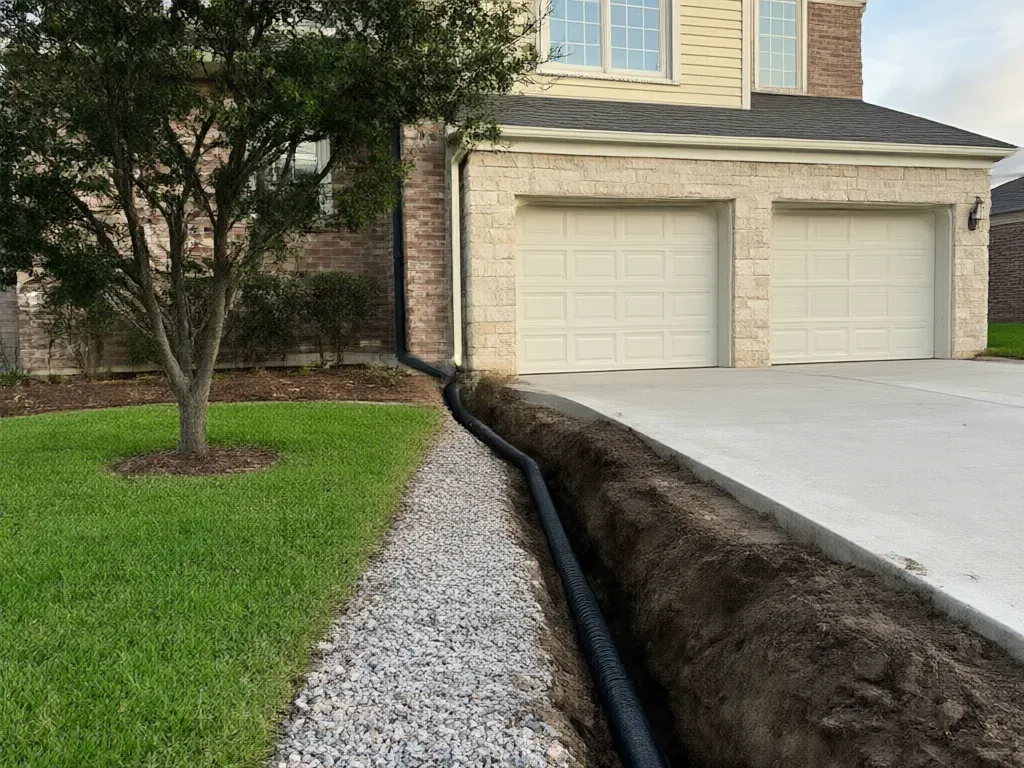
French Drains
A trench lined with filter fabric, a bed of washed gravel and perforated pipe that collects water sitting along the house and carries it away. They're the fix for side yards that stay soggy for days after a storm. Installed, they cost $38 to $65 per linear foot.
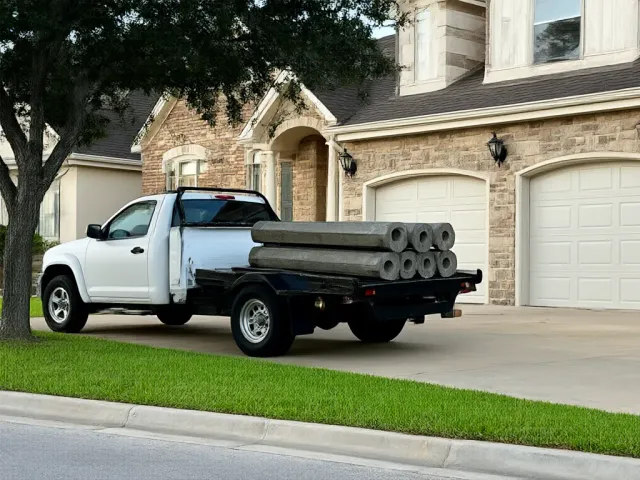
Buried Downspout Lines
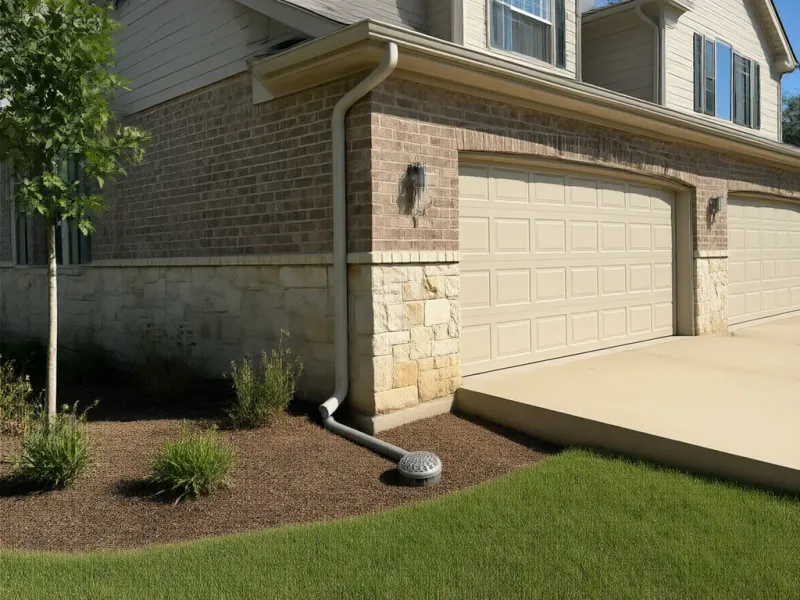
A downspout dumping at the corner of a slab soaks the same spot of clay every rain. We connect each downspout to solid buried pipe and run it to a pop-up emitter in the yard or out to the curb, for $22 to $40 per linear foot.
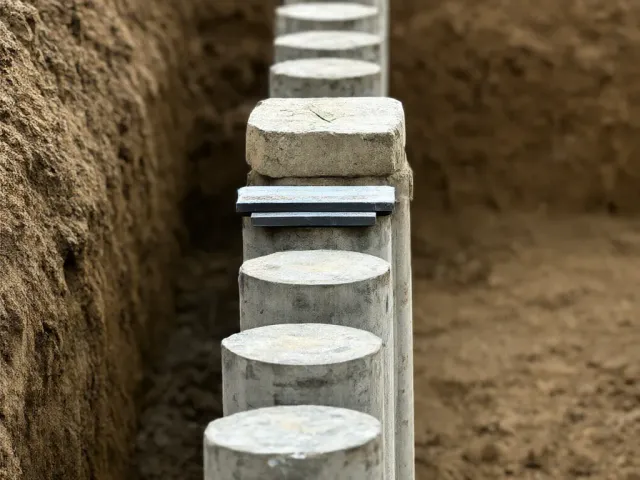
Surface Drains and Catch Basins
Flat back yards and low spots between houses hold water where it can't soak away. A catch basin at the low point, tied into solid pipe, pulls surface water off before it reaches the beam. Priced the same as buried downspout lines, $22 to $40 per linear foot.
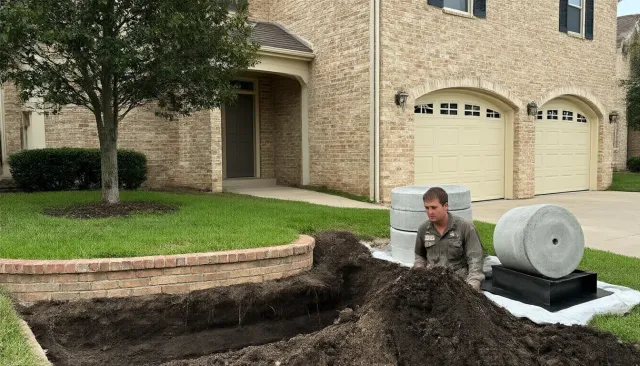
Regrading and Bed Correction
Code wants a minimum of 6 inches of fall over the first 10 feet out from the house. Years of mulch and new beds wipe that out. We cut the beds back, rebuild the slope and leave at least 4 inches of slab showing below the brick.
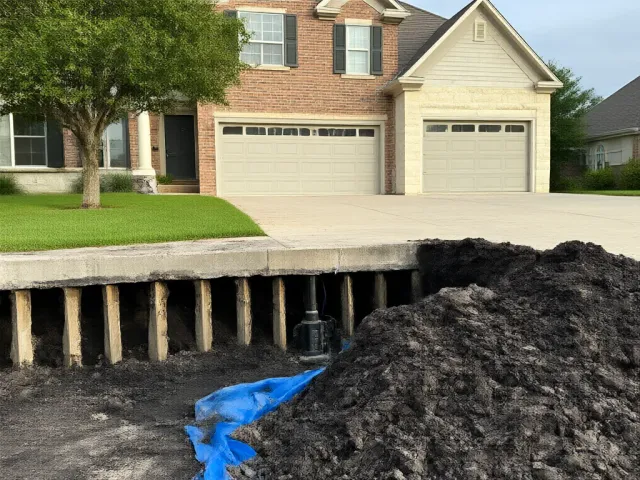
Root Barriers
Big shade trees dry out the clay under the nearest corner. A root barrier set 36 to 48 inches deep between the tree and the slab stops the thirstiest roots without killing the tree. They run $35 to $60 per linear foot.
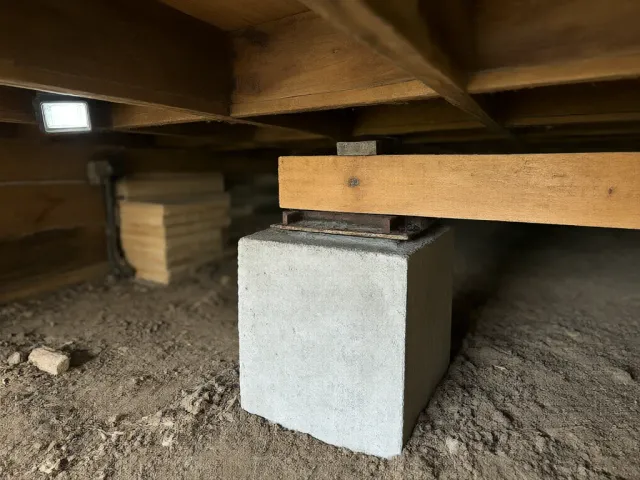
Foundation Watering Systems
In a dry summer, clay pulls away from the beam and the slab drops. A drip line 12 to 18 inches out from the slab, on its own timer zone, keeps that from happening. We install them for $1,200 to $2,800 per house.
Before and After
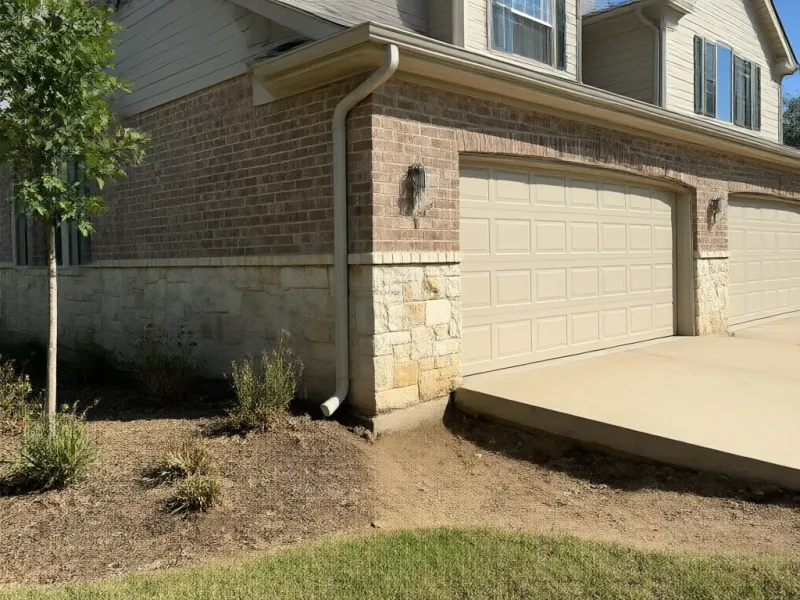
How Water Moves a Slab on Clay
Blackland clay swells when it takes on water and shrinks when it dries. A slab sitting on it moves with it. Nothing about that is a defect. The trouble starts when one part of the slab gets a lot more water, or a lot less, than the rest.
The common culprits are easy to spot once you know them. A downspout that empties at a corner. A sprinkler head that sprays the brick every morning. A flower bed built up higher than the slab so rain runs toward the house. A side yard where the neighbor's roof drains onto your side of the fence.
Then there's the opposite: the west wall in full sun with nothing watering it, or a big tree drinking from under one corner. That side shrinks in July, August and September while the rest of the house stays put. We see more summer settlement than spring heave, but both start with water.
Signs Your Foundation Has a Drainage Problem
Walk the house during a good rain. Water standing against the slab for more than a few hours, gutters overflowing at one corner, or mulch washing into the lawn tell you where the water's going. So does a line of soggy turf that never seems to dry out.
In summer, look for the opposite. A gap opening between the soil and the grade beam, wide enough to slide your fingers into, means the clay has shrunk away. Cracks in the brick on the sunny side or near a big tree, and doors on that side that start sticking in August, usually follow.
Inside, a musty smell in a pier and beam house or damp drywall at the bottom of an exterior wall can mean water is getting in, not just sitting outside. We check all of this on every foundation inspection, whether you called about drainage or not.
Drainage Before Piers, or Drainage With Piers
If the survey shows mild, seasonal movement and the cause is plain water, we'll fix the water first and tell you to watch the house for a season. Drainage work is a fraction of what piers cost, and on a lot of houses it's all they need.
If the house has already dropped enough to need piers, drainage still matters. Piers hold the beam where it is. They don't stop the clay in the middle of the slab from swelling when a downspout floods it. Fixing the water protects the repair, and it protects the warranty, since heave from water isn't something any pier can stop.
Our Foundation Drainage Process
Hose Test and Walkaround
We run water at the downspouts and low spots, watch where it goes, and note every place it sits against the slab.
Shoot the Grade
A laser level tells us how much fall the yard really has and where the water can drain by gravity to the curb or a pop-up emitter.
Written Drainage Plan and Price
You get a sketch of the routes and a line-by-line price the same day, so you can do the most important run first if you'd like.
Dig, Install and Flow-Test
We trench, set fabric, gravel and pipe, then run water through every line to prove it drains before we backfill.
Restore Beds and Turf
We put the beds back at the right height, tamp the trenches and lay the sod back. Your 5-year workmanship warranty starts that day.
Foundation Drainage Questions
Will a French drain fix my foundation?
It won't lift a slab that's already dropped. It will stop water from soaking one area of clay and causing heave or uneven movement. If the survey shows mild movement, drainage alone is often enough. If not, drainage protects the pier work.
Where does the water go?
By gravity, to a pop-up emitter in the yard, to the curb, or to a spot where the lot already drains. We shoot the grade first so we know the line will actually flow before we dig.
Do I need a root barrier if a tree is close to the house?
If the corner nearest a big tree keeps dropping in summer, probably. A barrier 36 to 48 inches deep cuts off the roots under the slab. It's far cheaper than removing a mature tree, and the tree keeps growing on the yard side.
How should I water my foundation?
Run a soaker hose or drip line 12 to 18 inches out from the slab, never right against it. Water on dry weeks, aiming for evenly damp soil, not mud. A timer zone makes it something you don't have to think about.
Will drainage work tear up my yard?
There's a trench for a day or two. We cut sod in strips, set it aside and lay it back after the pipe goes in. Beds get rebuilt at the right height, so most yards look better once it settles.
Get a Drainage Check With Your Free Inspection
Call (469) 536-0217. We'll run a hose test, check your grade and give you a written drainage plan the same day.