
Foundation Crack Repair in Frisco, TX
Frisco Superior Foundation Repair offers professional foundation crack repair in Frisco, TX, from slab edge and grade beam cracks to stair-step cracks in brick veneer and broken slab corners. We inject structural cracks with epoxy, seal cracks that let water in with polyurethane, repoint brick with matched mortar and rebuild corner pops. Crack injection runs $450 to $950 per crack.
The crack is usually the symptom, not the problem. Before we fix one, we measure it, log it and run an elevation survey to see whether the slab is still moving. A crack wider than 1/8 inch, or one with one side higher than the other, tells us to look at the foundation first and the crack second.
Get a FREE Estimate
Or call (469) 536-0217
Foundation Crack Repair Services
Different cracks, different fixes. Here's what we do for each one and what it costs.
Slab Edge and Grade Beam Crack Injection
Cracks through the exposed edge of the slab get cleaned, ported and injected. Epoxy bonds the two sides back together structurally. Polyurethane stays flexible and seals out water where a crack is still opening and closing with the seasons. Either runs $450 to $950 per crack.
Brick Veneer Crack Repointing
Stair-step cracks through the mortar joints get ground out and repointed with mortar matched to the color and texture of the old joints. Caulk shows from the street and fails in a year. Repointing runs $400 to $1,100 per area.
Slab Corner-Pop Repair
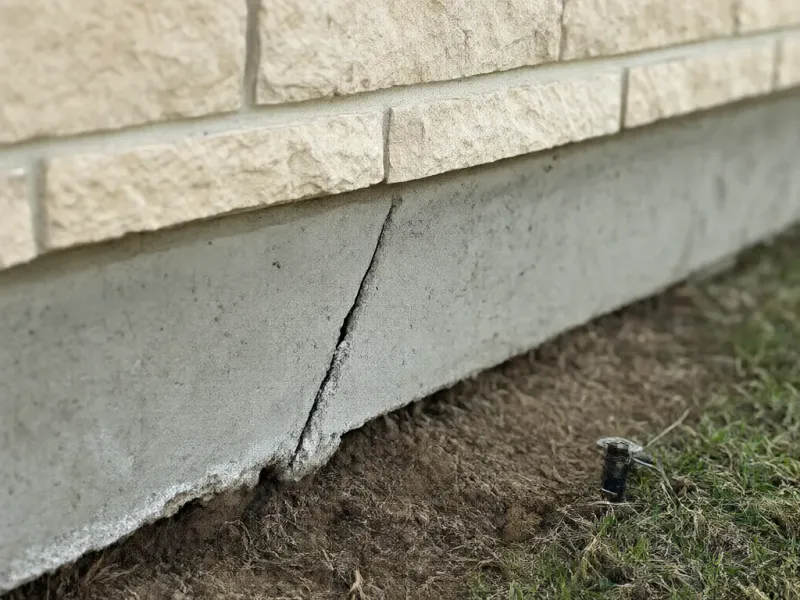
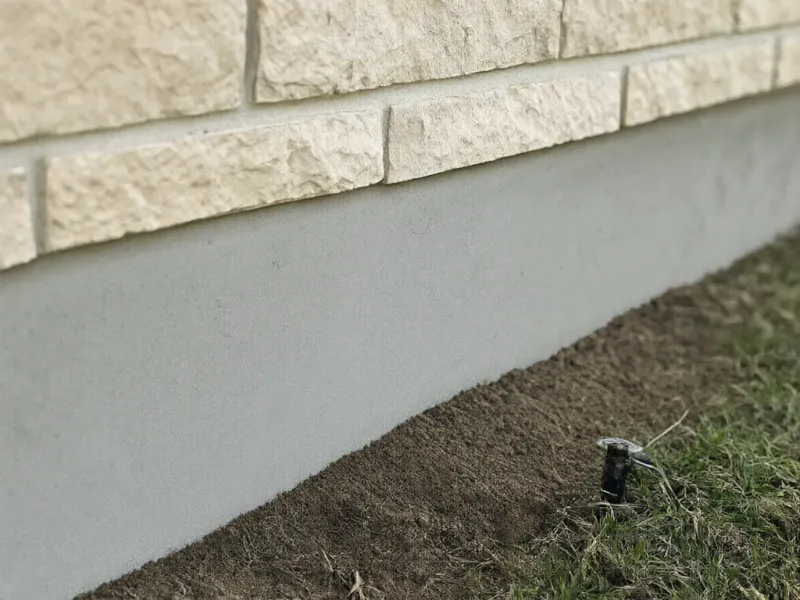
A triangle of concrete breaking off the corner of the slab under the brick is common here. It's usually the brick and slab moving with heat, not settlement. We chip out the loose piece and rebuild it with anchored repair mortar for $250 to $450 per corner.
Interior Slab and Tile Cracks
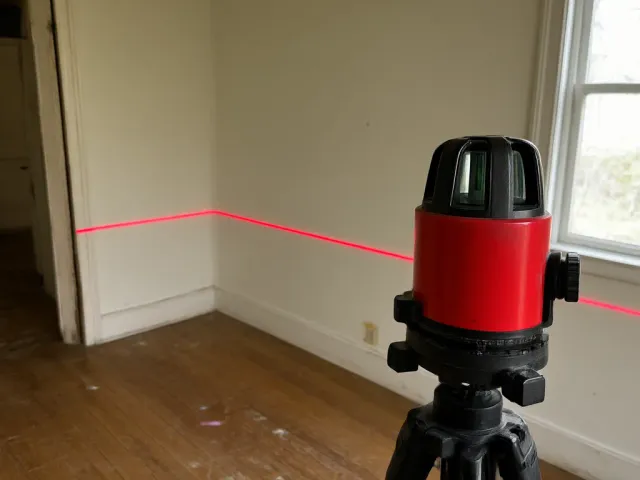
A crack telegraphing through tile in a straight line across a room is usually a slab crack underneath. If the survey shows the slab is stable, it can be filled and the tile replaced. If one side reads lower, the pier work comes first.
Crack Monitoring
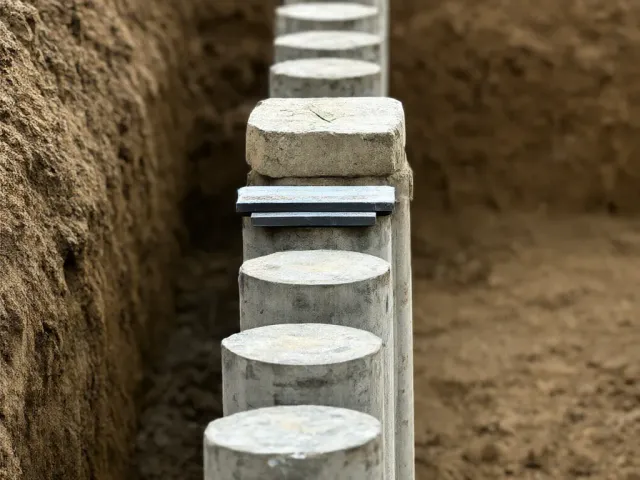
Not sure if a crack is still moving? We mark both ends and the width, photograph it and log it with the elevation readings. A second visit a season later shows if it's growing, before you spend money on it.
Before and After
Which Foundation Cracks Matter
Hairline cracks in a garage slab or a patio are shrinkage. Concrete shrinks as it cures, and every slab gets them. If you can't fit a credit card in it and both sides sit flush, it's cosmetic. Leave it, or seal it if water's getting into it.
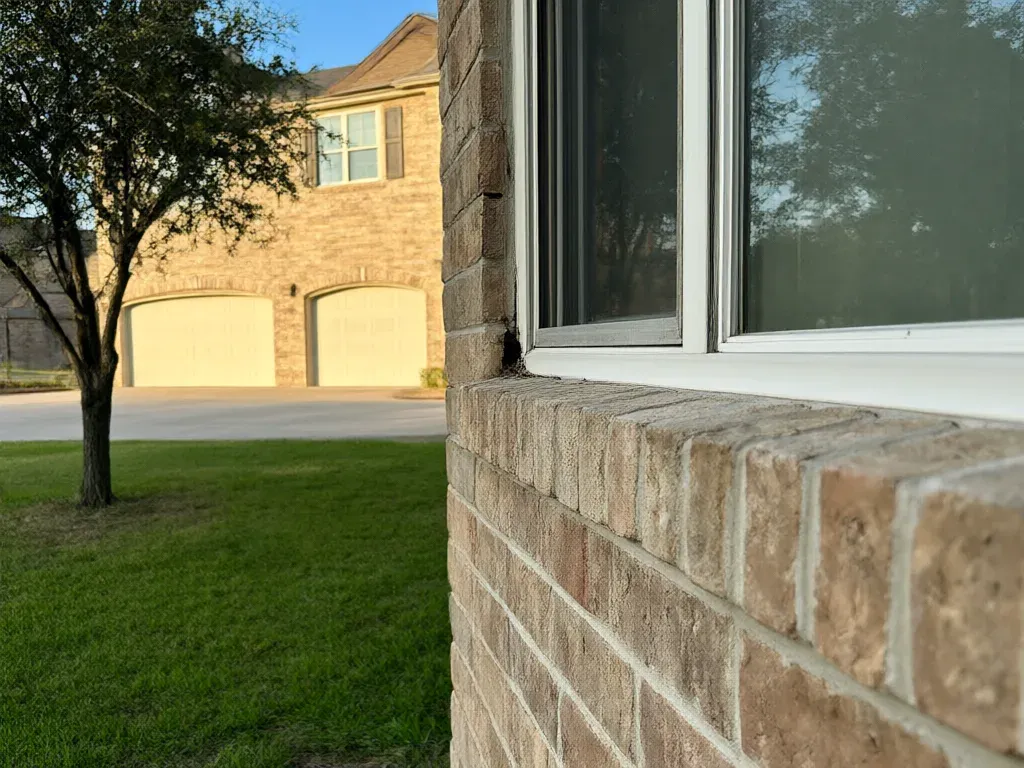
The cracks that get our attention are wider than 1/8 inch, have one side higher than the other, or keep growing. Stair-step cracks in brick that run from the corner of a window, cracks that open wider at the top than the bottom, and a gap opening between the brick and a window or door frame all point to movement under the house.
Location tells us something too. Cracks clustered on one side, near a big tree or under a downspout, usually mean that part of the slab is drying out or taking on water. Cracks spread around the whole house suggest the slab is dishing or doming. The elevation survey confirms which.
Cracks Inside the House: Drywall, Doors and Windows
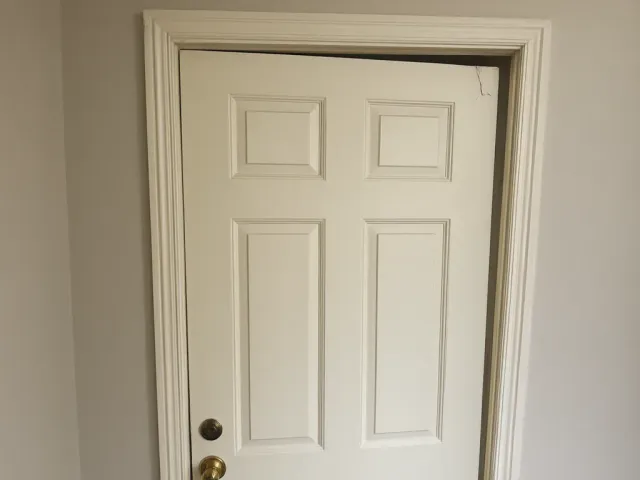
Inside, foundation movement shows up as diagonal drywall cracks running from the corners of doors and windows, cracks where the wall meets the ceiling, and nail pops in a line. Doors that stick, swing on their own or show a wedge-shaped gap at the top of the frame are the same story told by the trim.
Drywall cracks by themselves don't prove much. New houses crack as the framing dries out in the first year or two, and taped joints open up with big swings in humidity. What we look for is drywall cracking on the same side of the house as brick cracks and sticking doors. When those line up with low readings on the survey, the cracks are coming from the foundation.
We don't patch drywall. We'll tell you which cracks to leave until after a lift, because a lot of them close or shift once the slab comes back up, and patching early means patching twice.
Fix the Movement Before the Crack
Patching a crack on a slab that's still moving is money you'll spend twice. The patch cracks again in the same place, usually the next summer. So when the survey shows active settlement, we tell you to pier first and fix the cracks after the lift.
A lot of brick cracks close up on their own when the wall comes back up. We'd rather you see how far they close than pay us to repoint a crack that was about to shrink by half. After the lift, we come back for the cracks that stayed open.
When the slab is stable, crack repair is the whole job. A stable crack on a grade beam gets injected, a stable stair-step crack gets repointed, and a broken corner gets rebuilt. All of it carries a 2-year workmanship warranty.
Crack Repair Materials We Use
Epoxy for cracks that need to carry load again. It cures harder than the concrete around it and glues the two sides back into one piece. We only use it on cracks that have stopped moving, because a crack that keeps working will just break beside the epoxy.
Polyurethane for cracks that let water in or still move a little with the seasons. It expands into the crack and stays flexible. It's not a structural bond, and we don't sell it as one.
Mortar matched to your brick for veneer cracks, and polymer-modified repair mortar with anchors for corner pops. We don't use spray foam, silicone caulk or a can of patch from the hardware store on anything that holds up a wall.
Have Your Foundation Cracks Measured for Free
Call (469) 536-0217. We'll measure and log every crack, survey the slab, and tell you straight if it's cosmetic or a sign of movement.